
Landscape edges often suffer from erosion, material migration, and undefined boundaries that diminish the property’s appearance.
Grass encroaches onto paved surfaces while gravel spreads into lawns, creating maintenance headaches and visual disorder.
However, Belgian block driveway edging can be the solution, offering promising results while adding substantial value through enhanced curb appeal.
Homeowners who are seeking durable, attractive property definition face numerous options with varying performance characteristics. Plastic edging cracks and shifts, requiring frequent replacement. Metal borders rust and separate from surfaces. Concrete curbing often cracks and settles unevenly. Understanding superior alternatives helps property owners make investments that deliver lasting results.
What are Belgian Block Materials
We work with natural granite blocks known for exceptional durability and aesthetics. Quarried stone withstands decades of exposure without deteriorating like manufactured alternatives.
Natural color variations add visual interest while maintaining a cohesive look. Dimensional consistency allows for precise installation and clean, professional results.
Our Belgian block installations in New Jersey use materials selected for regional conditions. Granite resists freeze-thaw damage that commonly affects inferior products.
The textured surface provides traction and character, while the weight and density of each block help prevent shifting and maintain alignment long-term.
Design Applications and Possibilities
Belgian block edging offers versatile design applications across residential properties. Driveway borders create clean transitions between pavement and lawns.
Garden bed edging establishes permanent boundaries that contain mulch and reduce erosion. Walkway borders add structure while enhancing architectural appeal.
We also install blocks in a variety of patterns to achieve different visual effects. Soldier course installations position blocks vertically for a bold appearance.
Sailor course layouts place blocks horizontally for a wider profile. Basket weave and mixed-orientation designs allow for custom layouts that reflect individual style preferences.
Installation Process Requirements
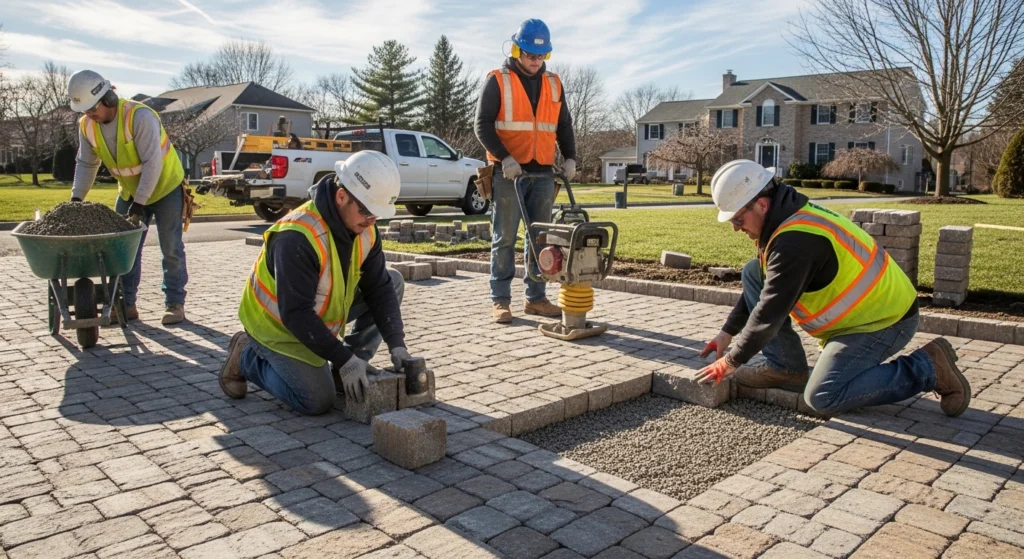
Proper installation ensures Belgian blocks remain stable and aligned through seasonal changes. Excavation depth must accommodate both the base material and block dimensions. A compacted stone base provides the stability needed to resist settling, while a sand bedding layer allows for precise positioning.
Our Belgian block installation process in Hillsborough requires specialized equipment and attention to detail. Level checks ensure consistent height along the entire run. Uniform spacing creates a clean appearance and prevents movement. Backfill materials secure the blocks while supporting adjacent surfaces.
Cost Considerations and Value
Belgian block materials represent a higher initial investment compared to plastic or metal edging. Installation requires skilled labor to ensure proper placement and longevity. Site preparation costs vary depending on existing conditions and layout requirements.
Over time, the value becomes clear. Belgian block eliminates recurring replacement costs common with lower-quality edging. Minimal maintenance reduces long-term expenses, while enhanced curb appeal contributes to overall property value. These benefits make Belgian block a cost-effective solution over the decades of use.
Integration with Existing Landscapes
Careful planning ensures new installations blend seamlessly with existing features. Color selection complements the surrounding hardscape and architectural elements. Height alignment creates smooth transitions between surfaces. Curved layouts follow landscape contours without compromising structural integrity.
Drainage management remains a critical part of every installation. Proper grading directs water away from structures and prevents erosion. Where necessary, spacing or drainage gaps allow subsurface water to escape, protecting both the edging and the surrounding landscape.
Maintenance and Longevity
Belgian blocks require minimal care compared to alternative materials. Occasional cleaning removes accumulated debris and restores the original appearance. Joint sand replenishment maintains stability where settling occurs. Realignment addresses isolated blocks affected by root growth or soil movement.
Seasonal inspection identifies minor issues before they escalate. Freeze-thaw cycles may displace individual blocks requiring repositioning. Vegetation control prevents root intrusion that causes displacement. Simple maintenance procedures preserve installation integrity for generations.
Benefits of Professional Installation
At Harrington Paving and Masonry, we understand regional soil conditions, climate factors, and design principles that ensure installations exceed expectations.
We are an experienced contractor of Belgium block installation in Hillsborough, delivering promising results that are long-lasting and elevate the property value as well.
Proper equipment ensures efficient excavation and precise placement.
Technical knowledge prevents common mistakes that compromise performance.
Warranty coverage provides confidence in workmanship quality.
If you’re considering Belgian block edging for your property, contact us to discuss design options and schedule an on-site evaluation.